Address
304 North Cardinal St.
Dorchester Center, MA 02124
Work Hours
Monday to Friday: 7AM - 7PM
Weekend: 10AM - 5PM
Address
304 North Cardinal St.
Dorchester Center, MA 02124
Work Hours
Monday to Friday: 7AM - 7PM
Weekend: 10AM - 5PM

Tilotec | International Security Technology Supplier & Anti-Drone Systems Reseller
Protecting critical infrastructure, industrial facilities, transport hubs and sensitive sites requires reliable awareness of unauthorized drone activity. Tilotec provides access to integrated anti-drone radar systems and counter-unmanned aircraft system (C-UAS) solutions designed to support drone detection, target identification, tracking and coordinated security monitoring.
Our featured hybrid anti-drone radar solution combines AESA X-band FMCW radar, passive RF scanning, electro-optical and infrared (EO/IR) camera systems, and integrated command-and-control monitoring within a coordinated security architecture.
Tilotec serves as an international supplier and reseller of anti-drone radar technology for eligible customers and projects in Nigeria, Bangladesh, the United States, and other international markets, subject to product availability, export authorization and applicable local regulations.
Looking for an anti-drone radar supplier, counter-UAS technology or an integrated drone detection solution? Contact Tilotec to discuss your project requirements.
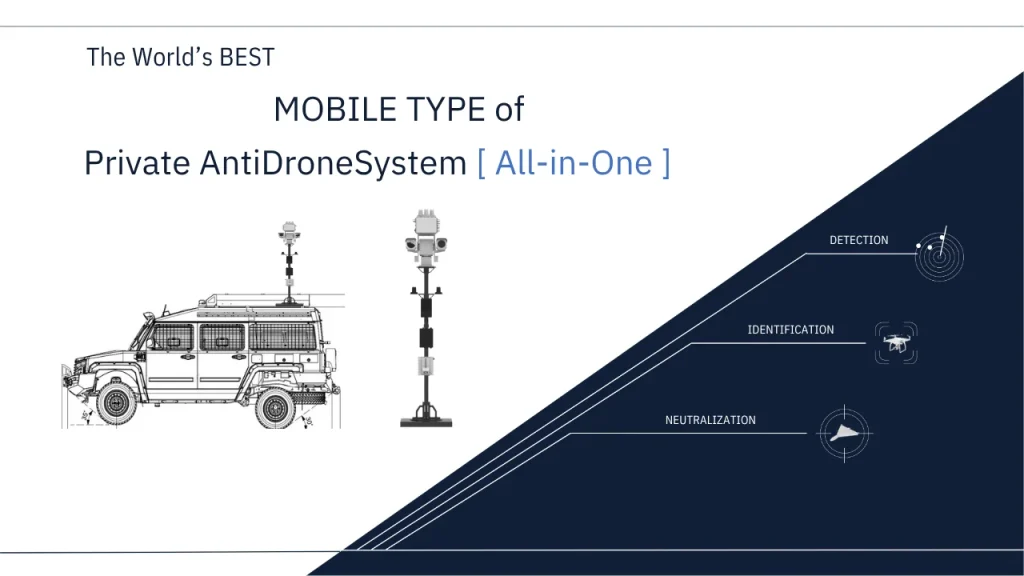
An anti-drone radar system is a security technology designed to detect and track unmanned aerial vehicles (UAVs), commonly known as drones, within a defined airspace.
Unlike a conventional security camera that depends on a visible line of sight, radar can provide information about the position and movement of aerial objects. Depending on the system configuration, radar can be combined with RF sensors, optical cameras, thermal imaging and a command-and-control platform to provide operators with additional information for threat assessment.
An integrated counter-drone system can bring together multiple detection and monitoring technologies to improve situational awareness around sensitive facilities.
Tilotec’s featured hybrid and integrated anti-drone radar solution brings together four principal components:
System performance depends on the selected configuration, the target drone, environmental conditions, site layout and installation requirements.
The featured system uses an Active Electronically Scanned Array (AESA) radar architecture with Frequency-Modulated Continuous Wave (FMCW) technology in the X-band frequency range of 8.5–8.6 GHz.
The radar is designed to provide aerial detection, target-position information and continuous tracking within its specified operating envelope.
Features described in the product documentation include:
The product presentation specifies a maximum detection range of up to 7 km for a target with a radar cross-section (RCS) of 0.01 m² and up to 10 km for a target with an RCS of 0.03 m². The RX192PLUS-M military version is also described as having an 8–10 km detection range.
These figures are configuration- and target-dependent and should not be interpreted as a guaranteed range for every drone or installation. Confirm the proposed configuration and applicable performance conditions with Tilotec.
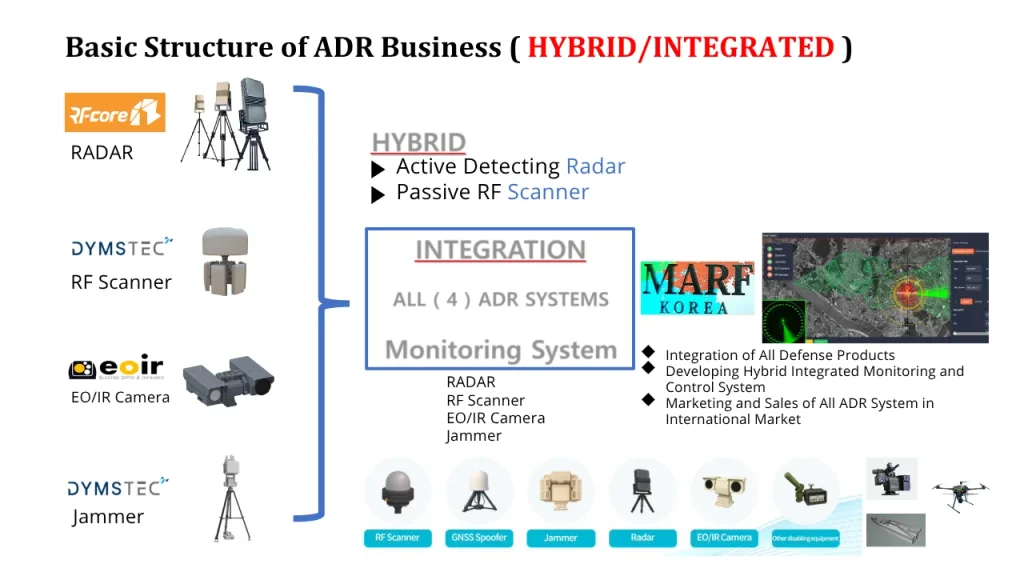
The integrated RF scanner is intended to identify compatible radio-frequency emissions associated with certain drones, remote controllers and communication links.
RF detection complements radar by providing another source of information about potential drone activity.
The documented frequency bands include:
Detection depends on the scanner’s supported frequency coverage, signal characteristics, antenna configuration and local RF environment. Drones that do not emit detectable radio signals may not be identified by RF scanning alone.
For this reason, combining RF sensing with radar and optical observation can provide a broader detection approach than relying on a single sensor type.
Electro-optical and infrared cameras provide visual information to complement radar and RF sensor data.
The featured integrated system documentation specifies:
The camera subsystem supports operator observation, visual assessment and target tracking. Actual identification performance depends on visibility, lighting, weather, target size and the selected camera configuration.
A coordinated monitoring interface brings together information from the system’s radar, RF scanner and camera subsystems.
Depending on the selected configuration, the command-and-control interface can support:
This architecture is intended to help security teams assess aerial activity using information from multiple sensor types.
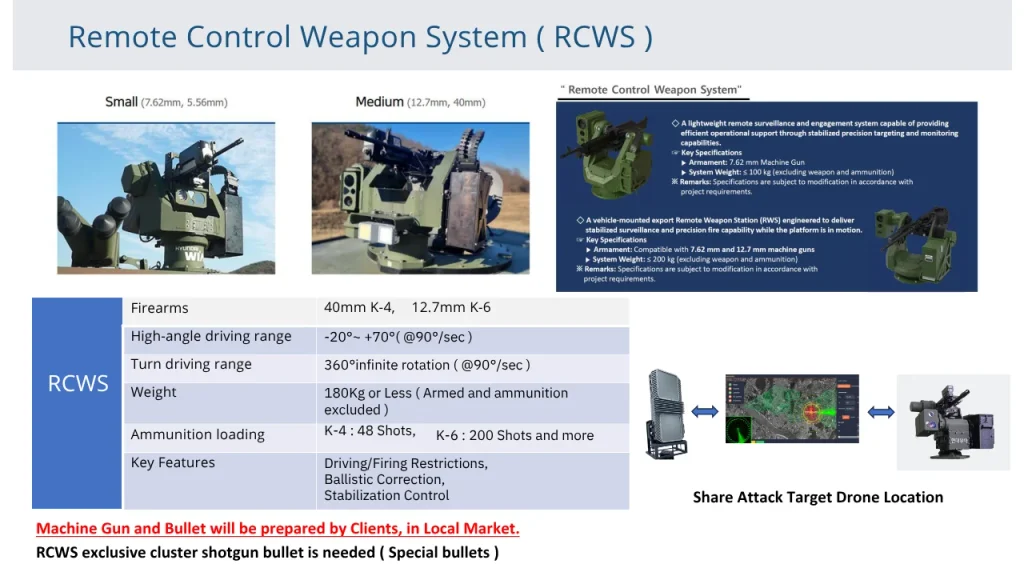
The product portfolio described in the technical presentation includes integrated hybrid systems, all-in-one configurations and mobile or platform-mounted concepts.
The availability and specification of individual configurations should be confirmed for each project. Options may include different radar panel arrangements, RF sensors, optical and thermal cameras, monitoring equipment and other compatible components.
Any RF or GNSS interference equipment is subject to separate technical assessment, regulatory authorization and applicable restrictions.
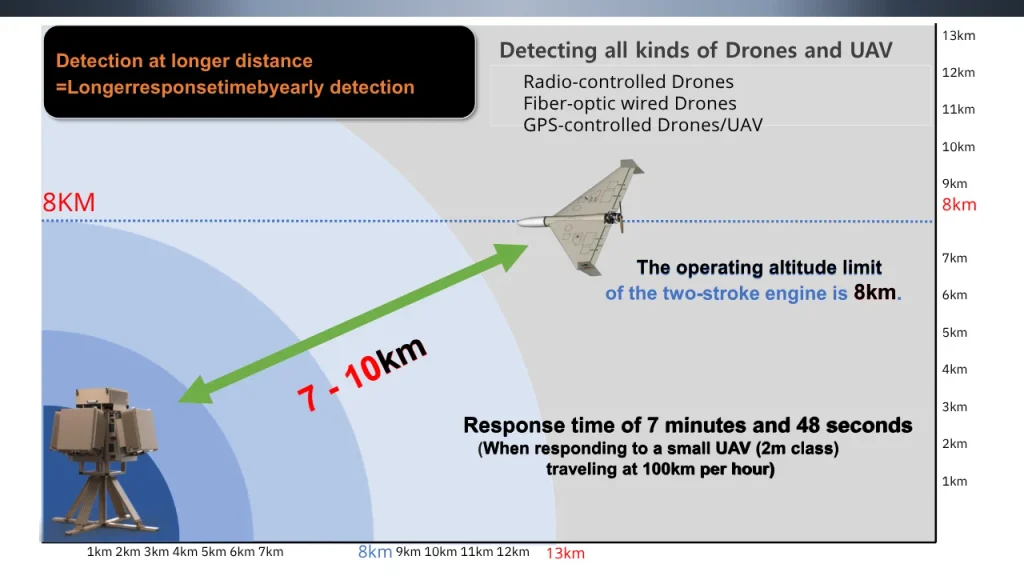
The following specifications are drawn from the supplied product presentation and apply to the documented configuration, not automatically to every system in the product range.
| Parameter | Documented specification |
|---|---|
| Radar technology | AESA FMCW |
| Radar frequency | X-band, 8.5–8.6 GHz |
| Detection architecture | Active radar and passive RF scanning |
| Radar detection range | Up to 7 km at 0.01 m² RCS; up to 10 km at 0.03 m² RCS |
| RX192PLUS-M version | Stated detection range of 8–10 km |
| Radar azimuth coverage | 360° in the specified integrated configuration |
| RF detection bands | 400 MHz, 900 MHz, 2.4 GHz, 5.8 GHz |
| EO camera zoom | 50× or greater |
| IR camera zoom | 15× or greater |
| Pan/tilt | 360° pan; −70° to +70° tilt |
| Image output | 1280 × 720 pixels |
| Stated jammer range | 5 km; configuration-dependent |
| Environmental standards stated | MIL-STD-810G, MIL-STD-461G and IP66 |
Technical note: Confirm the precise bill of materials, radar panel count, coverage geometry, RF frequency configuration, environmental compliance evidence, and applicable test conditions before procurement. Detection and interference ranges are not interchangeable, and neither guarantees performance against every target.
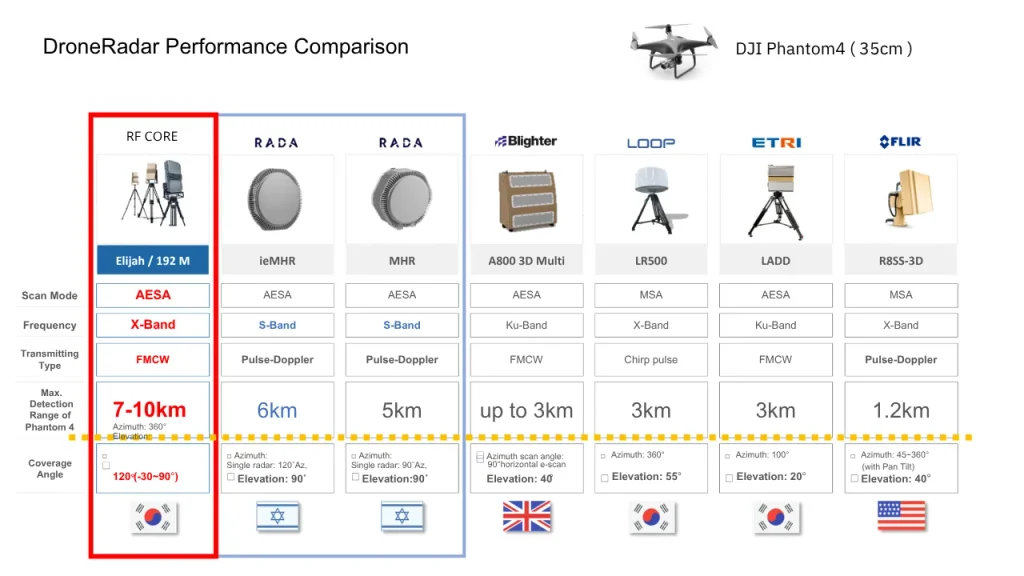
For site-specific security projects, an integrated radar and sensor architecture can be evaluated for facilities requiring persistent aerial monitoring.
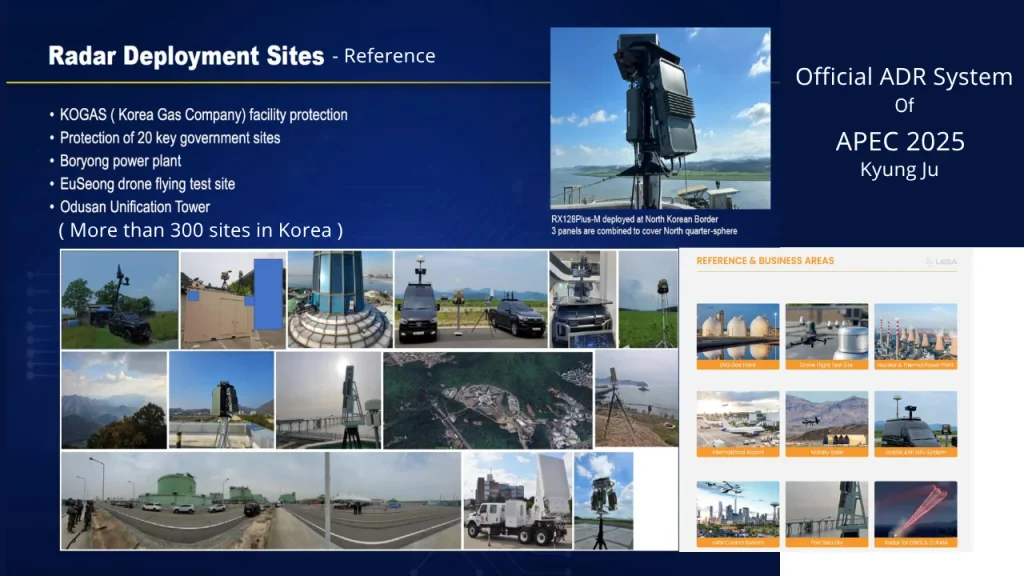
Potential application environments include industrial complexes, critical infrastructure, transport facilities and selected institutional sites.
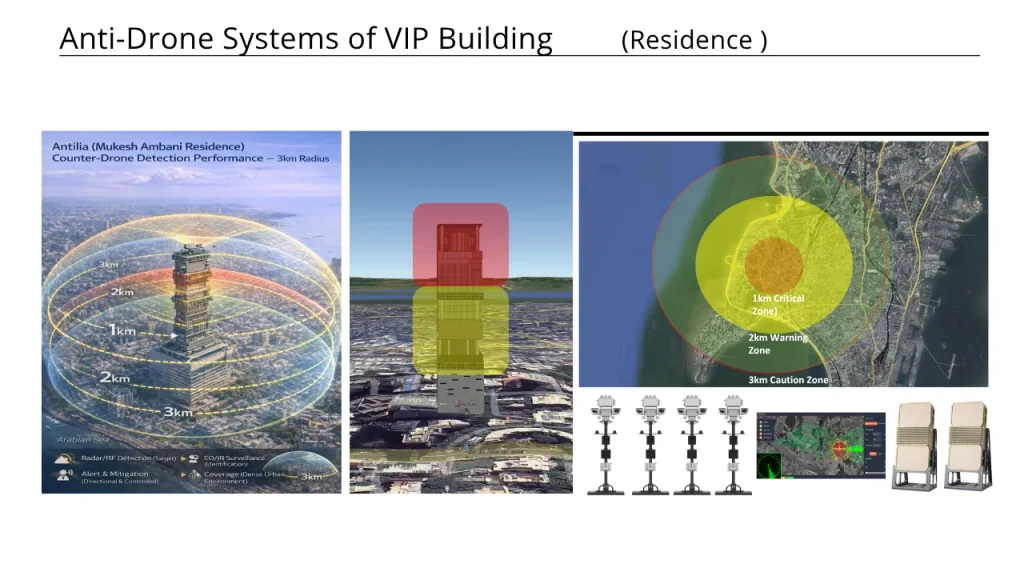
The product presentation includes private-site configurations combining RF detection, EO/IR camera equipment and associated system components in a coordinated installation.
Depending on the configuration, these solutions may be considered for private estates, commercial properties, corporate facilities and other locations requiring tailored security assessment.
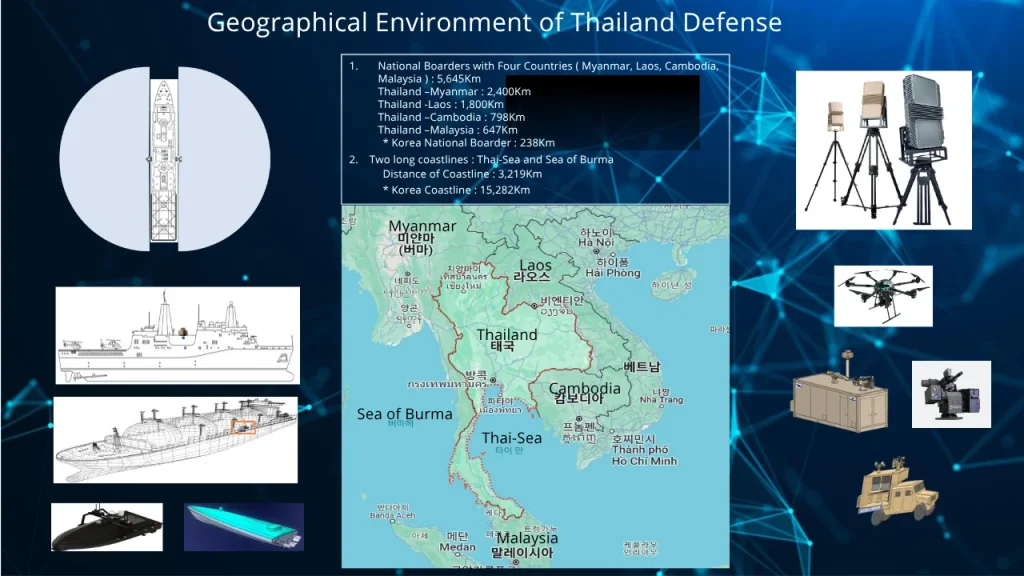
Mobile anti-drone radar configurations can be assessed for projects requiring equipment to be installed on a vehicle or another suitable mobile platform.
Platform suitability, power requirements, structural mounting, vibration resistance, communications and operational requirements must be confirmed during project engineering.
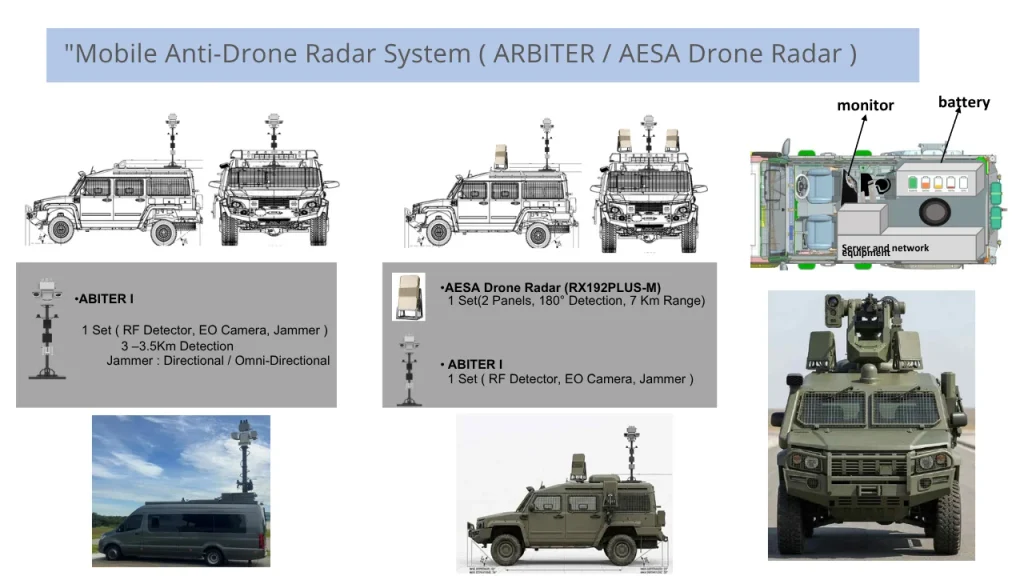
The product presentation also describes ship-mounted anti-drone radar concepts for maritime environments.
Potential project assessments may consider commercial vessels, ports and other maritime facilities. Marine installation requires specific evaluation of platform integration, environmental exposure, coverage and applicable operating approvals.
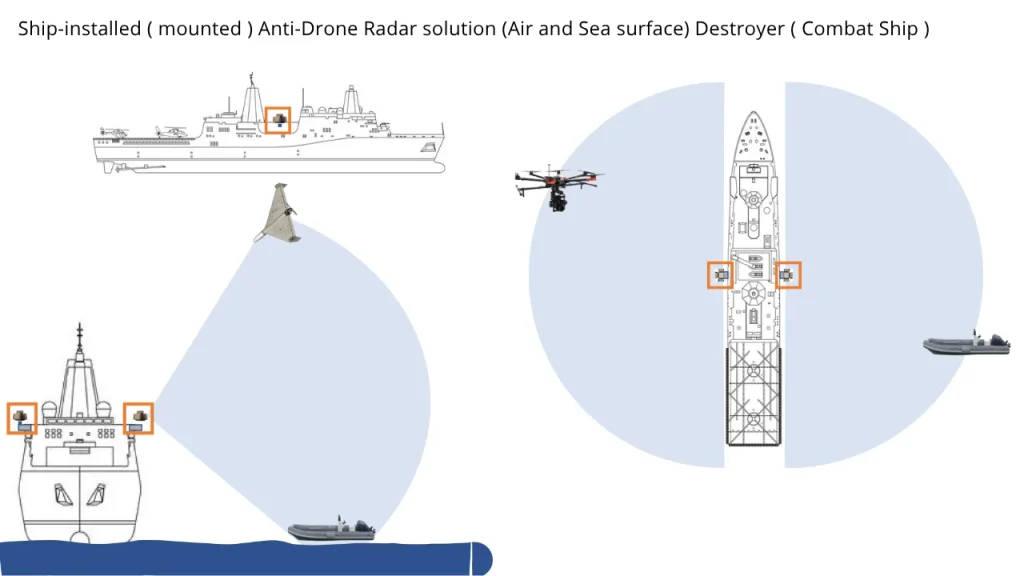
For larger sites, multiple sensors and monitoring units may be evaluated as part of a coordinated architecture. The final design should be based on a site survey, coverage analysis, target requirements and the customer’s existing security infrastructure.
Tilotec works with customers evaluating security technology for a range of commercial and institutional environments.
Drone detection technology may support the monitoring of unauthorized aerial activity near airport infrastructure. Any deployment must be coordinated with aviation authorities and comply with applicable aviation and communications requirements.
Industrial facilities, energy installations, storage areas and other critical infrastructure may require an assessment of aerial security risks and appropriate detection coverage.
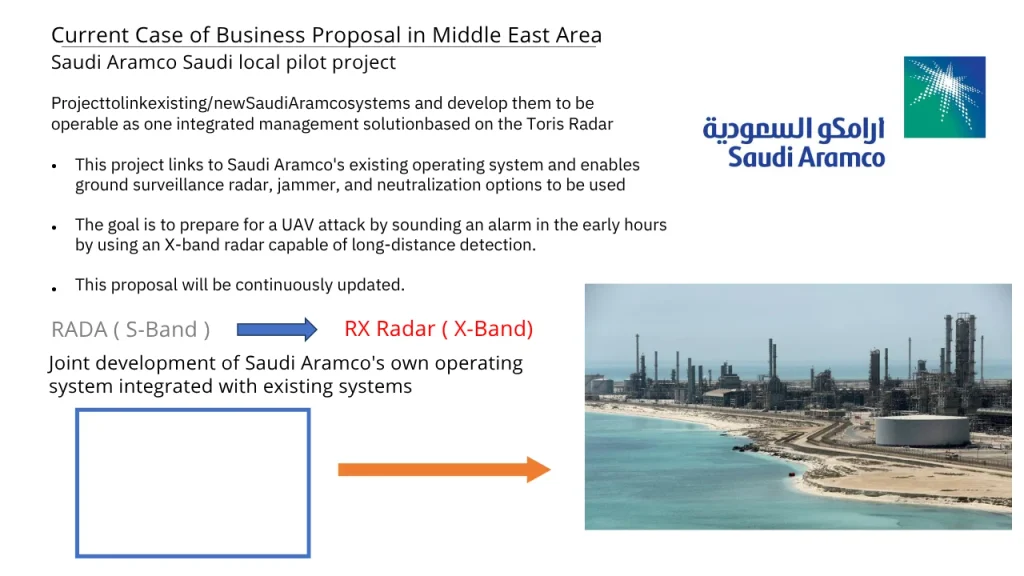
Integrated sensors can be evaluated for port facilities, coastal infrastructure and selected maritime applications.
Eligible institutional projects may require coordinated detection, monitoring, reporting and security-system integration.
Factories, logistics centers, warehouses and other large properties may benefit from a site-specific evaluation of aerial monitoring requirements.
Private estates, corporate premises and other designated sites can be assessed for suitable detection and monitoring configurations, subject to applicable laws and approvals.
The appropriate solution depends on the site, risk assessment, operating environment and authorized use.
Tilotec is a security technology supplier and reseller serving international project requirements. We help customers evaluate anti-drone radar products, understand technical options and initiate discussions regarding product supply and project-specific configurations.
Our market focus includes:
Bangladesh: Supporting eligible government, institutional, infrastructure and industrial customers seeking information about anti-drone radar and integrated aerial monitoring technology.
Nigeria: Supporting eligible public-sector, industrial, infrastructure and commercial project enquiries for counter-UAS and drone detection solutions.
United States: Responding to qualified enquiries for applicable products and projects, subject to relevant US import, export, end-user and regulatory requirements.
International markets: Considering enquiries from other countries on a case-by-case basis, subject to manufacturer availability, export controls, import permissions and end-user eligibility.
Tilotec’s role in each transaction will be defined by the applicable reseller arrangement, product authorization and project requirements. Product origin, manufacturer identity, certifications, delivery terms, warranty and after-sales responsibilities should be confirmed in the commercial proposal.
Every site has different coverage, operational and compliance requirements. Tilotec recommends a project-specific technical and commercial assessment before selecting a system.
Provide your country, installation location, intended application and general site requirements.
Describe the area requiring monitoring, the installation environment and the desired detection coverage. Site drawings or a general layout may help with the preliminary assessment.
The relevant technical team can assess the applicable radar, sensor, camera and monitoring configuration, subject to product availability and technical confirmation.
Applicable export approvals, end-user documentation, import permissions, radio-frequency authorization and other local requirements must be assessed before a transaction proceeds.
Following technical clarification, Tilotec can discuss the applicable quotation, delivery arrangements, documentation, warranty and support scope.
Request information for your anti-drone radar project today.
Radar actively transmits and receives radio signals to detect objects and estimate their position and movement. A drone detector may use RF scanning, radar, optical sensing or a combination of technologies. Integrated systems combine multiple sensor types to provide complementary information.
AESA stands for Active Electronically Scanned Array, while FMCW stands for Frequency-Modulated Continuous Wave. These terms describe radar array and signal-processing approaches used in the featured anti-drone radar system.
The supplied presentation lists up to 7 km for a target with 0.01 m² RCS and up to 10 km for a target with 0.03 m² RCS for the documented configuration. A specific RX192PLUS-M version is also described with an 8–10 km detection range. Actual performance depends on the target, configuration and environment.
The documented integrated radar configuration specifies 360-degree azimuth coverage. Coverage depends on the number and placement of radar panels and the selected system configuration. A project-specific layout should be confirmed before procurement.
Yes. The featured architecture integrates AESA FMCW radar, RF scanning and EO/IR camera monitoring. This combination provides complementary information for aerial detection and operator assessment.
Suitability depends on the site’s security requirements, installation conditions and regulatory environment. Airport and other critical-infrastructure projects require coordination with the relevant authorities and a project-specific technical assessment.
Tilotec accepts eligible project enquiries for Bangladesh, Nigeria, the United States and other international markets. Supply is subject to product availability, the applicable reseller arrangement, import and export requirements, and end-user eligibility.
Yes. Contact Tilotec with your country, project application, required coverage and preliminary technical requirements. The applicable product configuration, availability and commercial terms can then be assessed.
Requirements vary by product classification, destination, end user and intended use. Radar equipment, communications equipment and associated components may be subject to specific export, import or radio-frequency regulations. These requirements must be verified for each proposed transaction.
Looking for an anti-drone radar supplier, AESA drone detection radar, integrated counter-UAS system or multi-sensor aerial monitoring solution?
Contact Tilotec to discuss your application, request product information and evaluate the appropriate technical configuration for your project.
Tilotec — International Security Technology Supplier
USA: +1 323 707 3679
Nigeria: +234 8062 106 468
Bangladesh: +880 1622 005 005
Website: https://tilotec.com/
Contact us with your project requirements to begin a technical and commercial evaluation.