Address
304 North Cardinal St.
Dorchester Center, MA 02124
Work Hours
Monday to Friday: 7AM - 7PM
Weekend: 10AM - 5PM
Address
304 North Cardinal St.
Dorchester Center, MA 02124
Work Hours
Monday to Friday: 7AM - 7PM
Weekend: 10AM - 5PM


Tilotec offers advanced vertical axis wind turbines (VAWTs) and integrated renewable energy solutions designed for residential, commercial, industrial, and infrastructure applications. Featuring innovative hybrid Darrieus-Savonius rotor technology, these wind energy systems are engineered for low-wind self-starting, efficient power generation, and flexible installation. Our product range includes 300W to 3kW wind turbines, hybrid wind-solar street lighting systems, wind turbine controllers, and mounting structures. These solutions support clean electricity generation, energy efficiency, and sustainable power infrastructure for factories, commercial buildings, residential properties, telecom facilities, and off-grid applications.
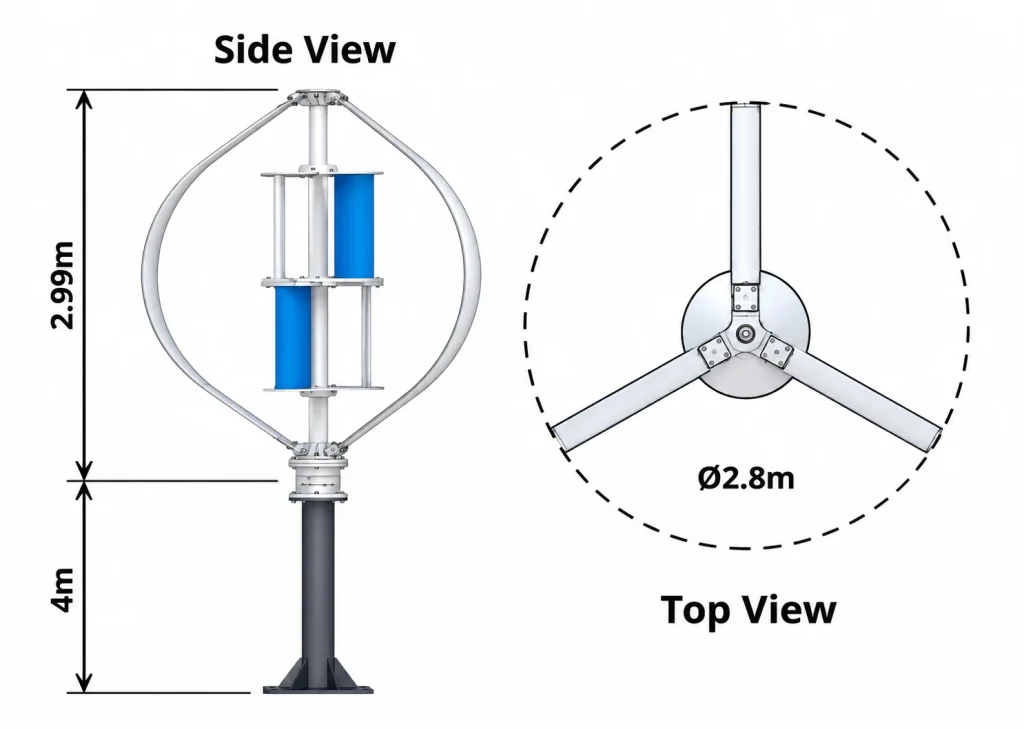
The Tilotec DS-300 is a compact 300W vertical axis wind turbine (VAWT) designed for small-scale renewable energy generation. It combines three external Darrieus blades with a two-layer internal Savonius rotor to support low-wind startup and efficient wind energy conversion. Its three-phase permanent magnet generator (PMG) delivers electricity for off-grid and hybrid power systems.
Key features
Applications
The DS-300 is suitable for distributed energy applications where compact installation, battery charging and supplementary renewable power are required.

The Tilotec DS-700 is a 700W vertical axis wind turbine developed for residential and small commercial renewable energy applications. Its hybrid Darrieus-Savonius rotor design supports self-starting at low wind speeds while providing effective energy generation under suitable wind conditions. The turbine uses a three-phase permanent magnet generator and supports off-grid battery storage and grid-connected configurations with compatible equipment.
Key features
Applications
The DS-700 is particularly suited to residential installations and small-scale energy projects that require a compact wind generation solution.
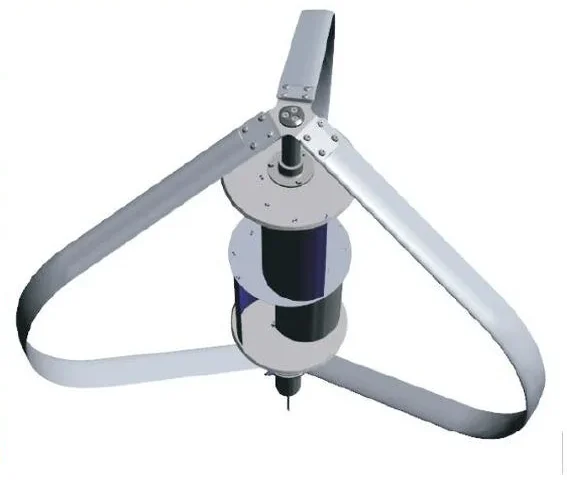
The Tilotec DS-1500 is a 1.5kW vertical axis wind turbine designed for medium-scale distributed renewable energy generation. Its hybrid rotor combines Darrieus and Savonius blade technologies to support low-wind startup and efficient power generation. The turbine features a three-phase permanent magnet generator and can be configured for both off-grid battery storage and grid-connected applications.
Key features
Applications
The DS-1500 is suitable for sites requiring more generation capacity than small residential turbines while retaining the flexibility of a distributed wind energy system.
The Tilotec DS-3000 is a 3kW vertical axis wind turbine designed for commercial, industrial and building-integrated renewable energy applications. Its hybrid Darrieus-Savonius rotor, permanent magnet generator and advanced braking systems provide a complete wind energy conversion platform for suitable wind conditions.
A specialized vibration-damping design supports rooftop installation, subject to appropriate structural assessment and installation requirements. The system can be configured for grid-connected electricity generation or off-grid operation with compatible controllers and energy storage equipment.
Key features
Applications
The DS-3000 is designed for larger distributed energy projects where rooftop or ground-mounted wind generation can supplement electricity supplied by the grid or other renewable sources.
The Hybrid Wind and Solar Street Lighting System integrates a vertical axis wind turbine, solar panels, a hybrid charge controller, battery storage and LED lighting into a standalone outdoor lighting solution. It combines wind and solar energy to charge the battery, supporting lighting operation in locations where conventional electrical infrastructure is limited or unavailable.
Available configurations include economical street lighting systems for functional outdoor illumination and decorative designs for urban and architectural environments.
Key features
Applications
The hybrid street lighting system provides an integrated renewable energy solution for outdoor lighting, combining wind and solar generation to support dependable operation without relying entirely on conventional grid electricity.
Tilotec offers dedicated wind turbine controllers and power conversion equipment designed to regulate generated electricity, manage battery charging and support grid-connected renewable energy systems. The controllers are matched to different turbine capacities and system configurations.
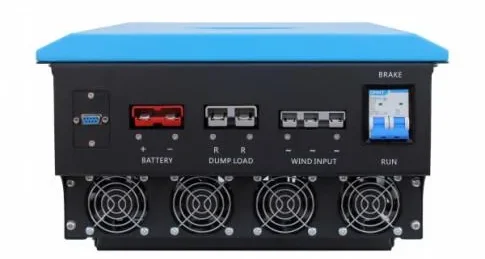
Off-grid wind charge controllers regulate the electrical output of wind turbines and manage battery charging. They incorporate protection functions to help safeguard batteries and turbine systems against operating conditions such as overvoltage, overcharging and excessive turbine speed.
Key features
Applications
Grid-tied wind controllers regulate variable wind turbine output and prepare electrical power for grid-connected conversion. Selected models incorporate maximum power point tracking (MPPT), electrical protection and communication functions to support integration with compatible grid-tied inverters.
Key features
Applications
Controller selection depends on the turbine model, electrical configuration, grid requirements and intended application.
Tilotec wind turbine systems can be supplied with dedicated mounting poles and support structures to accommodate different installation environments. These components provide the structural support required for positioning and installing vertical axis wind turbines at residential, commercial and industrial sites.
Product types
Applications
Mounting arrangements and structural specifications depend on turbine capacity, site conditions, building structure and applicable engineering requirements.
magnet generator.
Applications
Tilotec can coordinate project enquiries for DS-700 systems, including turbine mounting arrangements, charge controllers, battery requirements and electrical integration.
Wind and solar hybrid systems combine wind turbine generation with solar photovoltaic generation, typically supported by battery storage and an integrated control system.
Because solar and wind resources vary by location and season, combining them may improve the availability of renewable energy at some sites. The actual benefit depends on the relationship between local wind and solar resources.
Possible configurations
Applications
Tilotec can help coordinate enquiries for a system that matches the customer’s load requirements and available renewable resources.
Telecommunications facilities and remote monitoring stations may require continuous electricity even where grid access is unreliable or expensive.
Vertical axis wind turbines can be evaluated as part of a hybrid power architecture that may include solar panels, battery storage and backup generation.
Potential applications
System sizing must account for the site’s actual electrical demand, equipment voltage, battery autonomy, communications uptime requirements and seasonal energy availability.
Agricultural operations may have energy requirements for monitoring equipment, lighting, communications and selected electrical loads.
Tilotec can coordinate enquiries for small wind turbines and hybrid renewable energy systems for appropriate agricultural locations.
Potential applications
For water pumping, refrigeration, irrigation motors or other high-demand equipment, the complete system must be designed around starting currents, daily energy consumption and the available wind and solar resource. A small turbine should not be assumed to meet these loads without a detailed assessment.
Distributed renewable energy generates electricity close to where it is consumed rather than relying exclusively on centralised generation.
Small vertical axis wind turbines may be evaluated alongside solar PV, battery storage and other generation sources for selected microgrid and distributed-energy projects.
Potential applications
Tilotec can coordinate enquiries for equipment selection and proposed system configurations. Large community or industrial projects require a complete feasibility study, load analysis, resource assessment and electrical engineering design.
Vertical axis wind turbines and horizontal axis wind turbines use different rotor configurations. The appropriate technology depends on site conditions, energy requirements, installation constraints, maintenance access and project economics.
| Feature | Vertical Axis Wind Turbine (VAWT) | Horizontal Axis Wind Turbine (HAWT) |
|---|---|---|
| Rotor orientation | Vertical shaft | Horizontal shaft |
| Wind direction | Many designs can accept wind from different directions without yaw alignment | Most conventional designs orient the rotor toward the wind |
| Potential installation | Selected ground-mounted and rooftop projects | Ground-mounted and utility-scale applications |
| Turbulent environments | Some designs may suit selected complex wind environments; site assessment remains essential | Performance can also be affected by turbulence |
| Small-scale applications | Available in several compact power ratings | Also available in small power ratings |
| Energy production | Depends on rotor design and wind conditions | Depends on rotor design and wind conditions |
| Noise and vibration | Design- and installation-dependent | Design- and installation-dependent |
| Best selection criteria | Wind resource, site constraints, output, structure and economics | Wind resource, site constraints, output, structure and economics |
Which wind turbine is right for your project?
A vertical axis wind turbine is not automatically more efficient, quieter or more economical than a horizontal axis wind turbine. Tilotec recommends comparing independently verified performance data, expected annual energy production, installation costs, maintenance needs and total lifecycle costs before selecting a technology.
Tilotec works with customers seeking specialised technology products and project-oriented solutions across Bangladesh, Nigeria, the United States and other international markets.
Our approach focuses on matching equipment options to the customer’s requirements rather than treating every installation as a standard package.
What Tilotec can support
Our project approach
Product availability, warranty, certifications, delivery lead times and installation services must be confirmed for each project.
Bangladesh has opportunities to explore renewable energy for suitable commercial sites, industrial facilities, agricultural operations, public infrastructure and remote applications.
Tilotec welcomes enquiries from organisations seeking to evaluate vertical axis wind turbines, hybrid street lighting and wind-solar-battery configurations.
Potential customer segments
For every proposed installation, wind speed and wind distribution must be assessed at the intended turbine location. Coastal exposure, terrain, nearby buildings, rooftop turbulence, corrosion and extreme-weather loading should also be considered.
Tilotec can coordinate preliminary technical and commercial enquiries for projects in Dhaka, Chattogram, Khulna, Rajshahi, Sylhet, coastal regions and other locations across Bangladesh.
Nigeria offers potential applications for distributed renewable energy across industrial, commercial, agricultural and infrastructure sectors.
Tilotec welcomes project enquiries for suitable small wind turbines and hybrid renewable energy systems, particularly where customers wish to assess alternatives or complements to grid electricity and conventional backup generation.
Potential applications
Project feasibility depends on the wind resource at the specific location. A solar-wind hybrid system may be worth evaluating where local solar conditions and wind patterns complement one another.
Tilotec can coordinate preliminary project discussions, equipment enquiries and technical proposal requests for customers across Nigeria.
India’s diverse climatic and geographic conditions create opportunities to assess different renewable energy technologies according to local site requirements.
Tilotec welcomes enquiries from commercial and industrial customers exploring vertical axis wind turbines, hybrid streetlights, distributed wind generation and integrated wind-solar power systems.
Potential applications
Before proceeding, customers should assess local wind data, building regulations, electrical interconnection requirements, structural suitability and applicable renewable energy policies.
Tilotec welcomes international enquiries for small wind turbine products and renewable energy system configurations for suitable projects in the United States.
Potential applications include selected commercial properties, rural facilities, remote infrastructure, agricultural sites and hybrid renewable energy installations.
Every project must comply with applicable federal, state and local requirements, including relevant building codes, electrical standards, zoning restrictions, permits and utility interconnection rules.
The economics of small wind power depend heavily on the quality of the wind resource, installation costs, maintenance, electricity tariffs and available incentives. A professional feasibility assessment should precede any investment decision.
The following ratings and dimensions are reproduced from the manufacturer’s supplied proposal. They are reference specifications, not guaranteed energy-production figures.
| Model | Rated output | Dimension A | Dimension B |
|---|---|---|---|
| DS-300 | 300W | 1.24m | 1.00m |
| DS-700 | 700W | 1.95m | 1.80m |
| DS-1500 | 1.5kW | 2.80m | 3.20m |
| DS-3000 | 3kW | 4.00m | 4.50m |
| CH25K | 25kW | 10.50m | 11.13m |
The manufacturer’s general specification table lists a direct-drive, coreless, outer-rotor permanent-magnet generator configuration. It also lists a cut-in wind speed below 3 m/s, a rated wind speed of 12 m/s, a cut-out wind speed of 15 m/s and a survival wind speed of 60 m/s.
These are manufacturer-stated specifications. The exact model applicability, test conditions, current availability and interpretation of the wind-speed figures should be confirmed in the latest model-specific datasheet.
The correct turbine depends on more than its rated wattage.
Important selection criteria include:
For commercial projects, annual energy production estimates should use a turbine power curve and reliable site-specific wind data. A turbine’s rated output should never be interpreted as continuous output under all conditions.
A vertical axis wind turbine (VAWT) is a wind power generator whose main rotor shaft is oriented vertically. Its configuration differs from that of a conventional horizontal axis wind turbine. Different VAWT designs have different performance characteristics and installation requirements.
Small vertical wind turbines may be used for selected residential, commercial, agricultural, telecommunications, remote monitoring and distributed renewable energy applications. The actual suitability depends on the wind resource and electrical load.
The manufacturer lists a cut-in wind speed below 3 m/s for its product range. Cut-in wind speed indicates when a turbine may begin operating; it does not establish that the turbine will produce its rated output at that speed.
These ratings indicate different levels of nominal electrical power. The appropriate model depends on the required load, local wind conditions, installation constraints and expected energy production. A higher-rated turbine does not necessarily produce proportionally more electricity at every site.
Yes. A properly designed hybrid system can combine wind generation, solar PV, batteries and control equipment. The configuration should reflect local resource conditions and the required energy supply.
Some rooftop projects may be feasible, including applications proposed for the DS-3000 model. However, every installation requires structural, wind-load, vibration and electrical assessments before approval.
They can be considered for off-grid systems when the turbine, controller, storage and electrical equipment are appropriately sized. Depending on the load and available wind, additional solar generation or backup power may be necessary.
That depends on the electrical demand and available wind resource. A rated turbine capacity alone cannot establish whether it can supply a building’s daily energy requirements. Load analysis and annual energy modelling are essential.
Tilotec welcomes enquiries for turbine models, hybrid street lighting, wind-solar systems and related equipment. Final pricing, product availability, delivery, installation scope and warranty terms are subject to confirmation for the specific project.
Contact Tilotec with your installation location, intended application, estimated power demand, preferred system type and whether you need grid-connected or standalone operation. If available, provide wind data, site photographs and installation drawings to help the technical assessment.
Tilotec welcomes enquiries from businesses, project developers, infrastructure operators, industrial facilities, government organisations and renewable energy professionals seeking small wind turbines and hybrid renewable energy systems.
Whether your project involves a 300W micro wind turbine, a 700W residential wind turbine, a 1.5kW distributed wind system, a 3kW industrial rooftop turbine or a hybrid solar-wind streetlight, we can help coordinate a product enquiry and preliminary technical proposal.
Tell us about your project:

